
In an interconnected world, organizations increasingly rely on third-party services for everything from software development to data processing. While this collaboration can offer substantial benefits, it also introduces significant risks. Third-party risk management has become a critical component of a robust security strategy, and a unified platform can help address the challenges associated with managing these risks.
Challenges of Managing Third-Party Risks: Organizations face a range of challenges in managing third-party risks, including:
- Limited visibility and control over third-party activities
- Difficulty in assessing and mitigating risks
- Fragmented communication among stakeholders
- Resource and expertise limitations
Failing to address these issues can lead to security breaches, financial losses, and reputational damage.
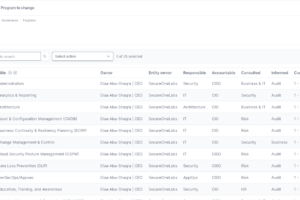
The Benefits of a Unified Platform: A unified platform centralizes all aspects of third-party risk management. This enables organizations to:
- Manage third-party relationships and contracts in one place
- Streamline risk assessment and mitigation
- Improve tracking of compliance and audits
- Generate comprehensive reports and analytics
With a unified approach, organizations can gain better control over third-party activities, enhance risk mitigation efforts, and reduce operational costs.
Integrating Third-Party Risk Management with Asset Management: Third-party risk management should not be a siloed process. By integrating it with asset management, organizations can ensure that all assets—physical, digital, and financial—are protected from third-party threats. This integration allows companies to:
- Identify and classify assets exposed to third-party risks
- Implement appropriate security measures based on asset sensitivity
- Monitor third-party access and detect anomalies
This comprehensive view ensures that third-party access to organizational assets is closely monitored and secured.
Integrating Third-Party Risk Management with Identity and Access Management (IAM): IAM systems control user identities and access to resources. By integrating third-party risk management with IAM, organizations can create a strong access control framework for third-party users. Key advantages include:
- Centralized management of third-party user access
- Enforcing least-privilege principles
- Monitoring third-party access in real time
- Responding swiftly to incidents involving third-party access
This integration helps mitigate risks of unauthorized access, data breaches, and insider threats from third-party vendors.
Enhancing Visibility and Control: Effective third-party risk management requires visibility into all third-party activities and relationships. A unified platform improves this visibility by providing insights into:
- Contracts and agreements
- Risk assessments and profiles
- Compliance status
- Security incidents and breaches
This transparency allows organizations to identify high-risk vendors, monitor behaviors, and take proactive steps to mitigate risks before they escalate.
Best Practices for Effective Third-Party Risk Management: To maximize the effectiveness of third-party risk management, organizations should:
- Establish clear policies and procedures
- Conduct comprehensive risk assessments
- Implement due diligence during vendor onboarding
- Continuously monitor third-party performance
- Develop a robust incident response plan
By following these practices, organizations can build a strong foundation for managing third-party risks.
Conclusion: Managing third-party risks is essential for maintaining organizational security. A unified platform offers a comprehensive solution by integrating risk management with asset management and IAM, providing visibility and control over third-party activities. By adopting a unified approach, organizations can mitigate risks, safeguard their assets, and ensure regulatory compliance.